Full-scope structural assessment programmes
Comprehensive Investigation
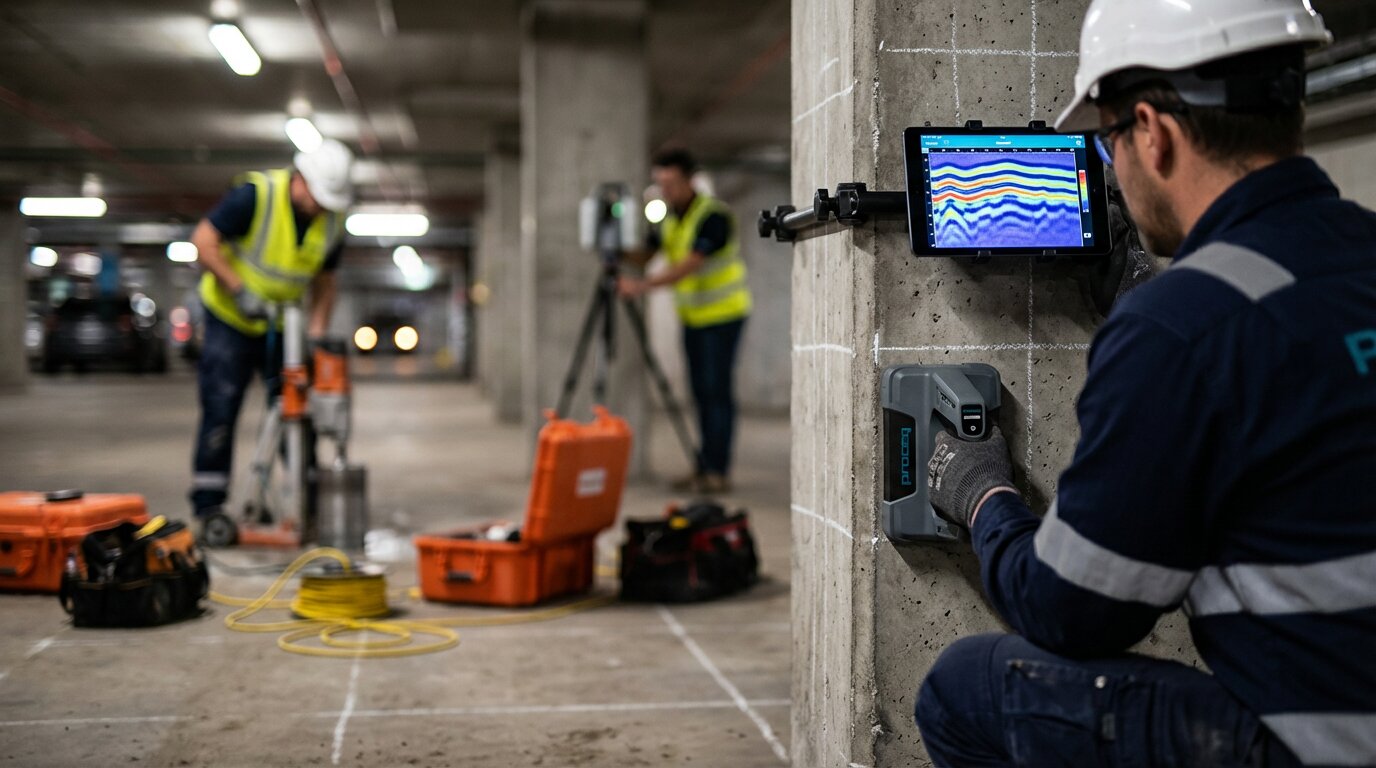
SiteOps comprehensive investigations deploy multiple NDT techniques in an integrated programme designed to answer specific structural questions. Rather than applying individual tests in isolation, we combine technologies to cross-validate findings and build a complete picture of structural condition.
A typical comprehensive investigation begins with GPR scanning for reinforcement mapping, UPV testing for concrete quality, and thermography for moisture and delamination detection. NDT results guide targeted coring for laboratory analysis. Where ongoing monitoring is warranted, we design and install structural health monitoring systems.
Every comprehensive investigation delivers an RPEQ-certified technical report with risk classification per AS/NZS ISO 31000:2018, residual capacity assessment, and a recommended intervention pathway. Our Make Safe and Monitor hierarchy ensures recommendations are proportionate to actual risk - avoiding both over-conservative intervention and under-conservative deferral.
Comprehensive investigations are the appropriate scope for complex structural questions: building acquisition due diligence, asset portfolio condition assessment, design life extension evaluation, post-disaster structural evaluation, and litigation or insurance investigation where defensible evidence is essential.
The value of an integrated programme is cross-validation. A single technique can mislead: a low UPV reading might be a void or might be poor coupling; a thermal anomaly might be moisture or shading; a GPR reflection might be a tendon or a conduit. By deploying complementary methods over the same elements, SiteOps confirms findings against each other before any conclusion is drawn. NDT screening across the whole structure then directs a small number of cores to the locations that actually matter, so the destructive testing is minimal and the data is representative rather than random.
Reporting is built for decisions, not just data. Each finding is tied to a risk rating, a residual capacity view, and a recommended action with an indicative timeframe and cost band, all certified by an RPEQ engineer. The Make Safe and Monitor hierarchy means recommendations are proportionate: immediate works only where the risk requires it, monitoring where a condition is uncertain but not dangerous, and planned maintenance where deterioration is slow. This gives owners, strata committees, insurers, and courts a clear, defensible basis for spending decisions and dispute resolution.
Key Features
- •Integrated multi-technology NDT programme
- •RPEQ-certified investigation reports
- •Risk classification per AS/NZS ISO 31000:2018
- •Residual capacity assessment
- •Make Safe and Monitor intervention hierarchy
- •Remediation pathway recommendations with cost guidance
- •Priority-ranked action items with timeframes
- •Digital deliverables (annotated imagery, CAD overlays)
Standards
Applications
- •Building acquisition due diligence
- •Asset portfolio condition assessment
- •Regulatory compliance assessment
- •Post-disaster structural evaluation
- •Design life extension assessment
- •Litigation and insurance investigation
- •Strata building condition report
- •Capital works programme development
Codes & compliance
Australian Standards for Comprehensive Investigation
Every comprehensive investigation engagement is delivered against recognised Australian and international standards. These are the codes SiteOps works to, and how each one applies to the work.
AS/NZS ISO 31000:2018
Risk Management - Guidelines
The risk classification framework underpinning every SiteOps investigation report and its Make Safe and Monitor intervention hierarchy.
AS 3600:2018
Concrete Structures
The governing design standard for assessing reinforced and prestressed concrete capacity, cover, and durability in existing structures.
AS 4100:2020
Steel Structures
Applied when an investigation covers steel framing, connections, and strengthening of existing steel elements.
AS 3700
Masonry Structures
Reference for assessing brick, block, and stone masonry condition and capacity in heritage and commercial buildings.
AS 5100
Bridge Design
The suite SiteOps interprets results against for bridge, culvert, and transport infrastructure assessment.
Stack & equipment
Technologies used
GPR
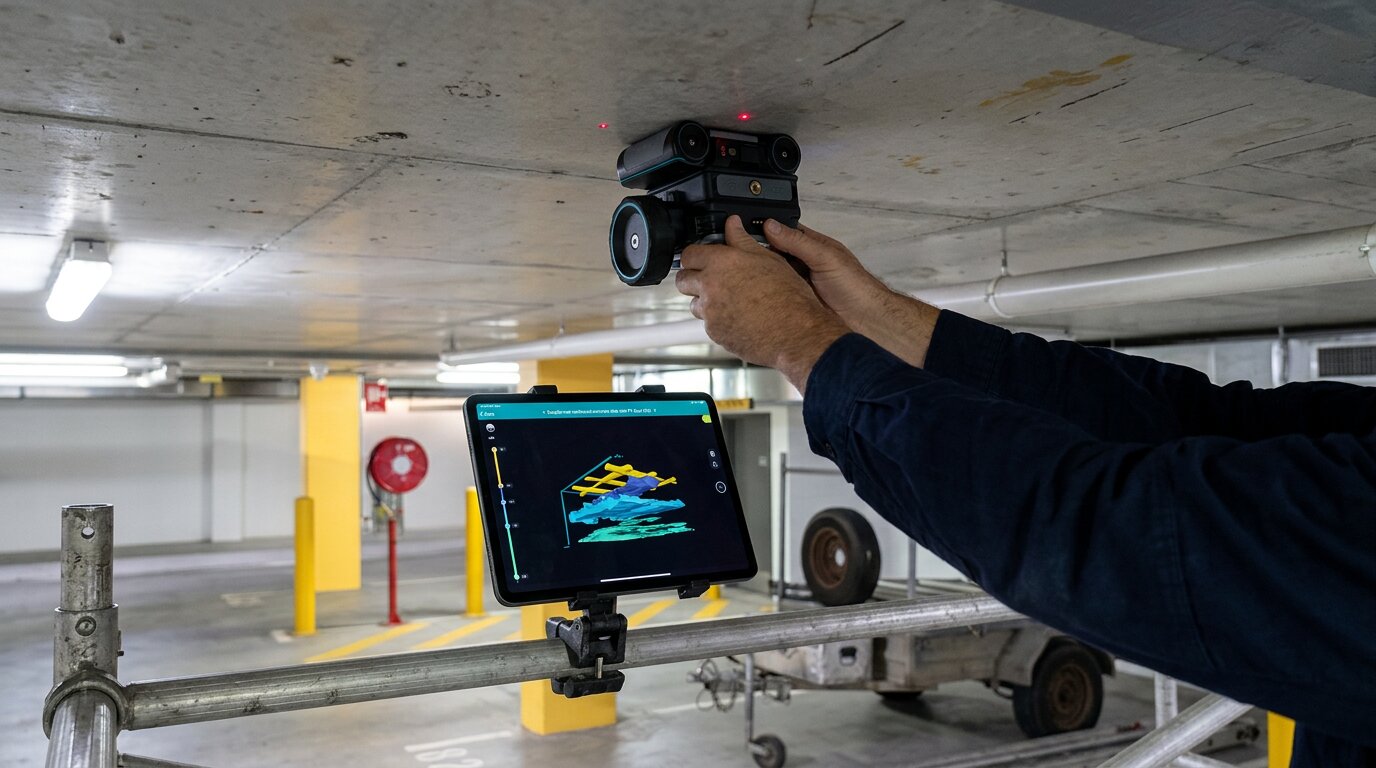
Ground-Penetrating Radar
Sub-Surface Structural Mapping Without Destructive Access

UPV
Ultrasonic Pulse Velocity
In-Situ Concrete Quality and Uniformity Assessment

IRT
Infrared Thermography
Thermal Imaging for Subsurface Defect and Moisture Detection

Core
Core Extraction & Laboratory Testing
NATA-Certified Material Characterisation

SHM
Structural Monitoring Systems
Real-Time Measurement of Structural Movement
Case experience
Related projects
 Heritage
South Brisbane, QLD
Queensland Art Gallery External Works
Structural investigation of Queensland Art Gallery external works to establish concrete thickness, reinforcement placement, spacing, cover, and estimated bar diameters for engineering design and planning.
View project Residential
Robina, QLD
Varsity Towers Structural Investigation
Comprehensive investigation of Varsity Towers focused on deflection-critical elements, as-built detailing, and concrete and reinforcement testing to support remediation planning.
View project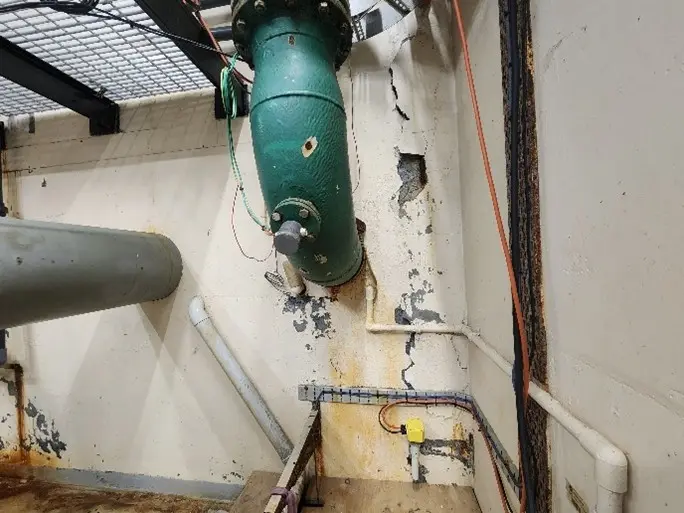 Infrastructure
Main Beach, QLD
GCWA Pumpstation Investigation
Targeted investigation of GCWA Pumpstation concrete wall deterioration, combining as-built detailing with material testing and reinforcement exposure assessment.
View projectService areas
Comprehensive Investigation by location
FAQ
Common questions about Comprehensive Investigation
When is a comprehensive investigation warranted?+
A comprehensive investigation is appropriate when the structural question cannot be answered by a single technology. Common triggers include: building purchase due diligence (need to understand full condition), visible deterioration on multiple elements (need to determine extent and cause), change of use assessment (need capacity verification), post-event assessment (need to determine damage extent), and asset management planning (need condition data for capital budgeting).
How long does a typical comprehensive investigation take?+
Site investigation typically requires 3–10 days depending on building size and complexity. Laboratory testing adds 7–14 business days. Report preparation and technical analysis requires 5–10 business days after laboratory results are received. A complete programme from brief to final report is typically 4–8 weeks. SiteOps offers expedited programmes (2–3 weeks) for urgent matters such as post-fire assessment or litigation timelines.
What does an RPEQ-certified report include?+
The report includes: executive summary, investigation methodology, field observations and photographs, NDT results (with annotated images and maps), laboratory test results, structural analysis and interpretation, risk classification per AS/NZS ISO 31000:2018, remediation recommendations ranked by priority and timeframe, cost guidance for recommended works, and appendices with raw data. The report is certified by a Registered Professional Engineer of Queensland (RPEQ).
How is the investigation scope determined?+
SiteOps develops the scope during the briefing phase. We review available documentation (original drawings, previous reports, maintenance records), inspect the site, and confirm the structural questions the investigation needs to answer. The scope is formally documented in a proposal that specifies technologies to be deployed, testing quantities, and deliverables. This ensures the client approves the investment before work begins.
Need Comprehensive Investigation?
Tell us about your asset and objectives - we'll scope the right investigation programme.
Get a Quote